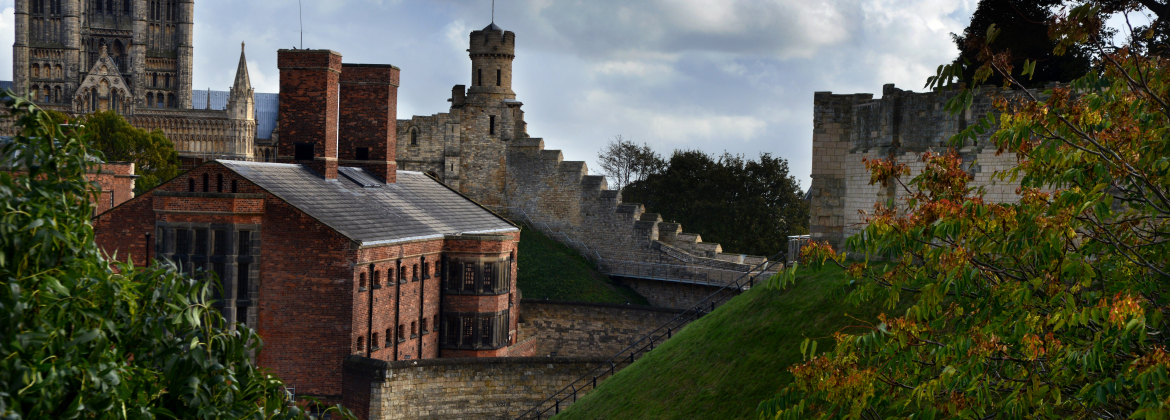
To what extent does Lincoln Castle prison embody, in microcosm, the “panoptic” model of surveillance that Foucault (1977) saw as central to the organisation of modern societies?
The purpose of this report is to analyse the similarities between the organisation and structure of both the Lincoln castle prison and Foucault’s (1977) panoptic model. I will detail the historical context of the time surrounding Foucault’s theory (1977) and the difficulty of transferring this theory from principle into practice, with detailed comparisons to Lincoln Castle prison.
During the late 18th and early 19th century, the start of the industrial revolution caused a dramatic increase in the UK’s population. The rise in jobs in large inner cities caused a change in society and how the government dealt with crime and punishment (Ross, 1999).
The increase in population meant it wasn’t cost effective to publicly execute criminals. As a result, prisons transformed from places to hold criminals before execution, to places for the accused to serve their sentences, with the goal of reforming and reintegrating into society (Foucault, 1977).
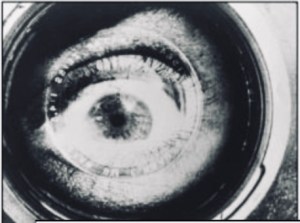
Foucault’s panoptic model was designed to separate prisoners and create a microcosmic surveillance society within the prison. The theory of the panoptic model was to isolate and survey prisoners to stop the influence of others. It relied on constant surveillance to keep order. The prisoners had the feeling of constantly being monitored. They became used to the panoptic model, they then self-disciplined and conformed in fear of being surveilled (Foucault, 1977).
Lincoln castle prison held men, women and children from 1848-78 and was one of the first prisons in the UK to be designed using the ‘separate system’. This system kept prisoners apart from the influence of others. The Victorians believed that this would encourage them to ‘reflect and repent, and more importantly to reform’ (Lincoln castle website, 2018).
The separate system is similar in ideology and structure to Foucault’s (1977) panoptic model, ‘A compact model of the disciplinary mechanism’, (Foucault, 1977).
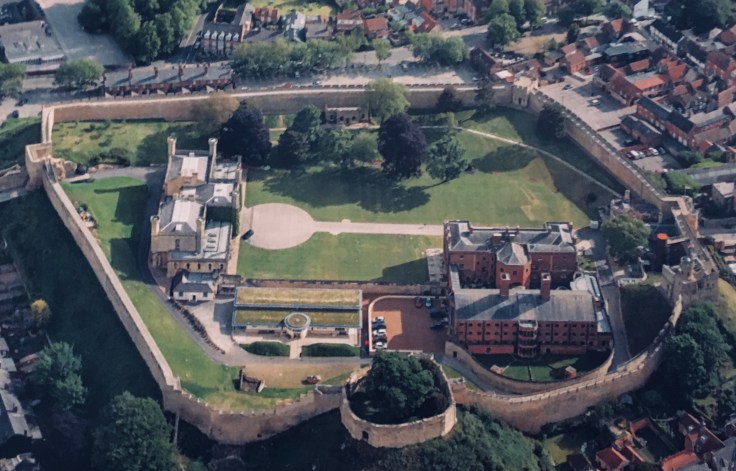
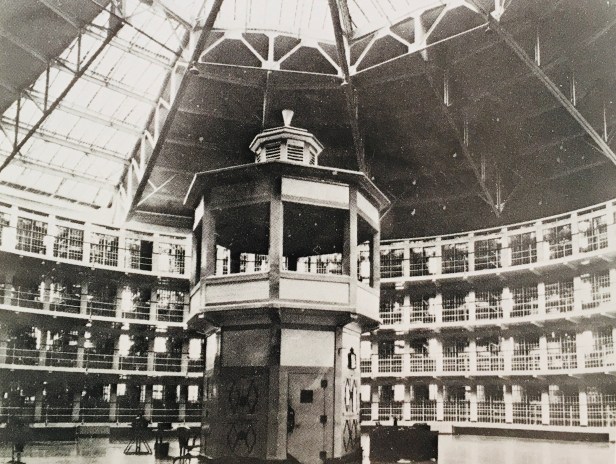
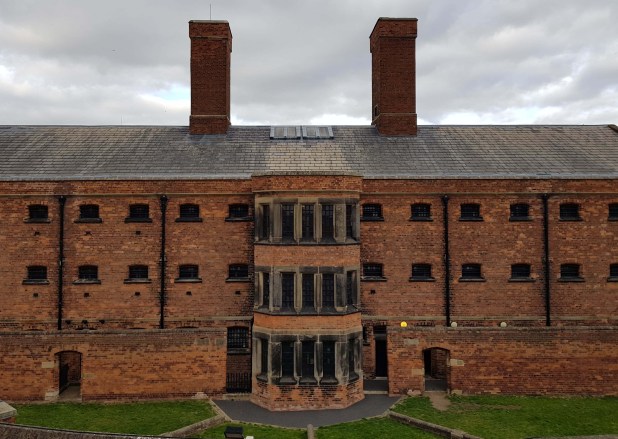
The panoptic model floor plan consisted of a centre guard tower, surrounded by isolated cells. The guards could see into each cell, but the prisoners could not see into the guard tower. This structure is similar to Foucault’s (1977) panoptic model as the centre tower could see into each cell but the prisoners weren’t aware when they were being watched.
The prisoners could also see into each other’s cells, encouraging them to survey each other to keep to the social norms of the prison, Stokoe, (2009).
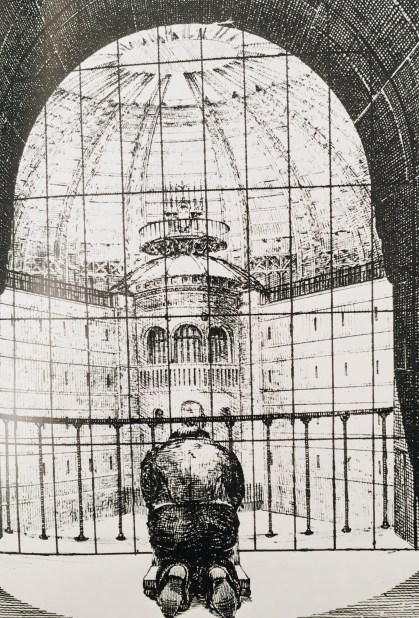
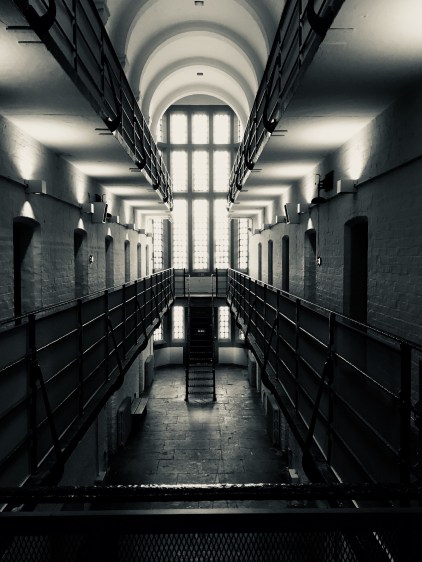
The panoptic model design uses individual cells to isolate prisoners. Lincoln castle prison uses this structure but it doesn’t allow for others, except the guards, to see into the cells. Foucault’s (1977) original model relied on the prisoners to survey each other, in order to correct themselves and others into following the expected norms, similar to what is expected in society Stokoe (2009).
Foucault’s (1977) theory was successful in its theoretical basis but when applied to the practical world, many elements of the theory didn’t translate and were difficult to enforce due to population increase and an underestimation of people as individuals, Mcnay (1992).
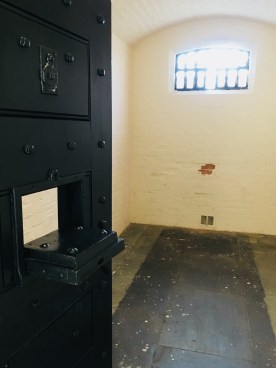
Due to high prison populations many cells, intended for individual use, in turn, could house up to 6 prisoners to a cell, (The Lincoln Castle Website 2018). The needed isolation in order for prisoners to reform, as detailed in Foucault’s theory, wasn’t possible due to the practical issues affecting many societies at the time.
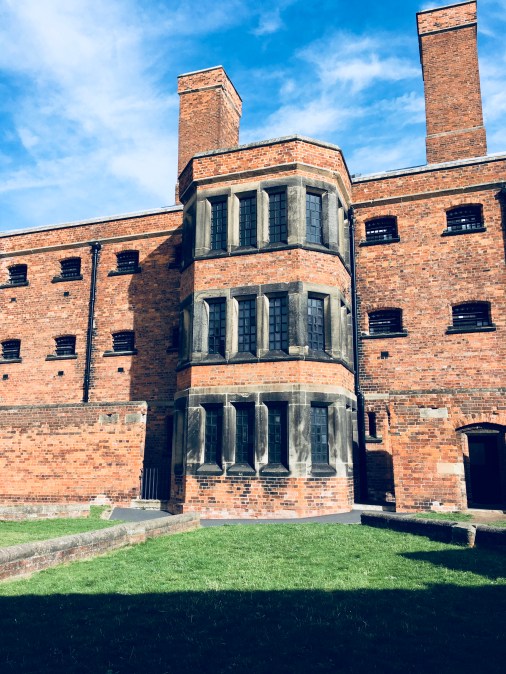
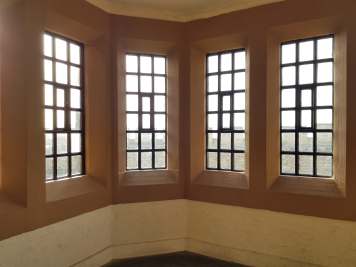
The exercise yards of Lincoln castle prison used a centre guard tower as a panoptic viewing point. This should have meant that the guards could monitor all prisoners at all times, (Foucault 1977). But practical issues such as the scale of the area and viewing obstructions meant it wasn’t possible for authorities to panoptically monitor all prisoners constantly. This allowed for breakdowns in expected norms and the individuals’ reform.
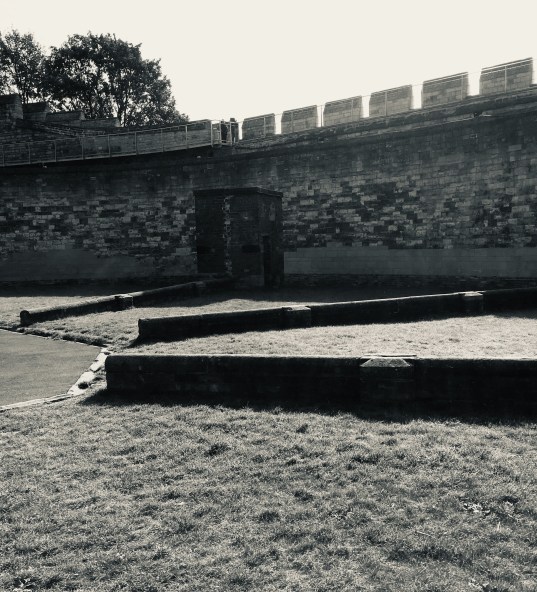
Figure 12 shows the remains of toilet blocks built for the male prisoners in the exercise yard. These would have obstructed the Guards view of prisoners and the increasing prison population meant it would have been difficult for guards to monitor all prisoners at once, allowing for hidden illegal behaviours.
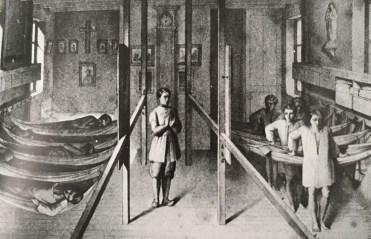
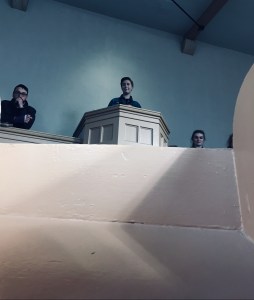
Another panoptic area in the Lincoln prison is the chapel. This was used for daily sermons to encourage prisoners to repent their sins and to reform through the fear of God. The chapel is similar to an example used in Foucault’s (1977) Discipline and Punish (see pages 166-67). Figure 13 shows a class of prisoners being taught the dangers of alcohol in Fresnes prison.
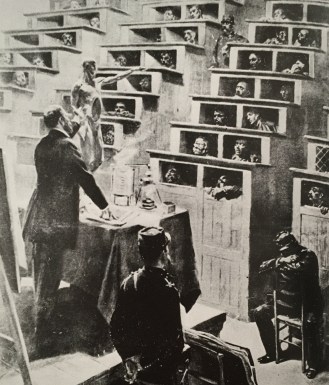
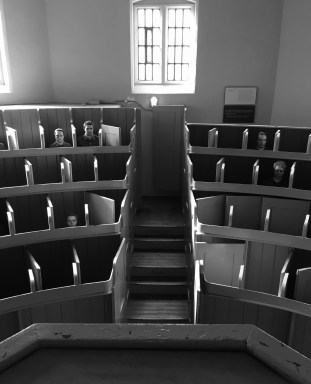
The chapel’s layout forced prisoners into individual cubicles, with no visibility of others, apart from the authoritarian in the pulpit who could survey all prisoners, this meant prisoners could focus solely on reforming.
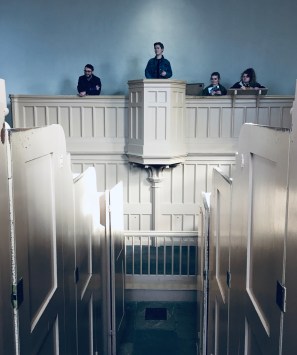
But again when put into practice, many prisoners would avoid attending the sermons through illness or claiming other religious beliefs. Also, guards were unable to see the prisoners hands in the cubicle, hiding illegal behaviours.
Foucault’s theory relies on prisons being able to control mass amounts of people at once through cell isolation and panoptic monitoring. The difficulties of transferring the principle of Foucault’s theory into practical use shows that the theory didn’t account for the impossibility of controlling every individual or variable. This shows that Foucault’s theoretical model couldn’t practically control or organise modern societies.
References:
Foucault, M., & Sheridan, A. (1977). Discipline and Punish: The birth of the prison. Pg.166-67. Penguin.
Lincoln castle website. (2018). Victorian Prison. Retrieved from: https://www.lincolncastle.com/content/victorian-prison.
McNay, L. (1992). Foucault and Feminism: Power, gender, and the self. Cambridge, England: Polity Press. (1992). Retrieved: November 13, 2018.
Ross, S. (1999). The industrial revolution (History in writing). London: Evans Bros.
Stokoe, E. (2009). ‘For the Benefit of the Tape. ResearchGate. Retrieved from: https://www.researchgate.net/publication/223525044_For_the_benefit_of_the_tape_Formulating_embodied_conduct_in_designedly_uni-modal_recorded_police-suspect_interrogations
 SOC221 - Advanced Social Thought Blog
Leave a comment