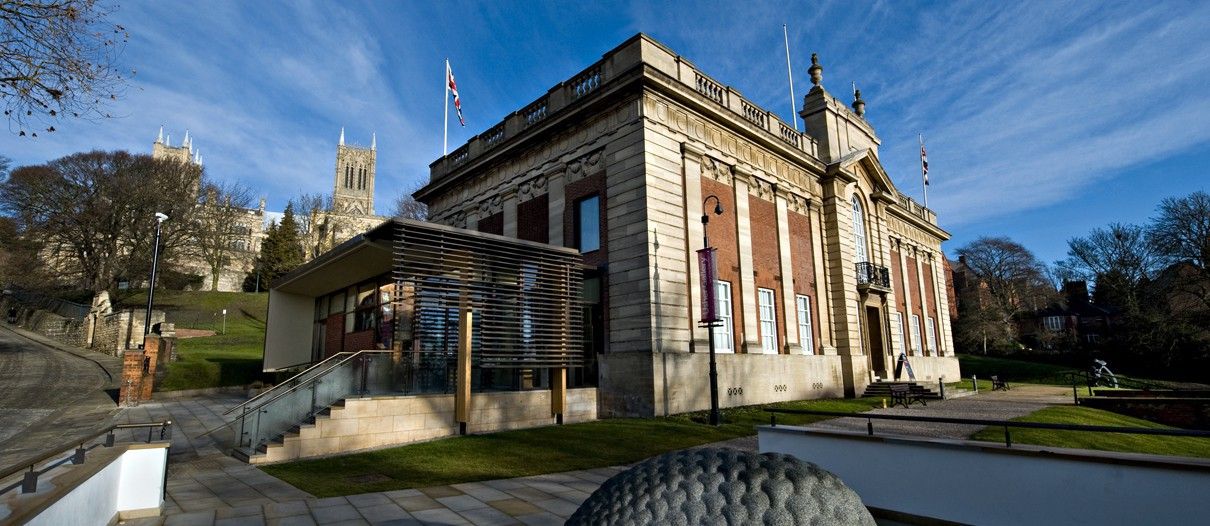
Museums and Art-galleries do not simply admit visitors; they actively seek to produce certain sorts of visitors.
During this report, I will be discussing how museums and art galleries are not simply public institutions but are socially constructed in order to shape and produce certain conformist and acceptable visitors. I will use sociological theory from Foucault (1977) and my own field research to evidence the theory that museums and galleries actively seek to produce certain sorts of visitors.
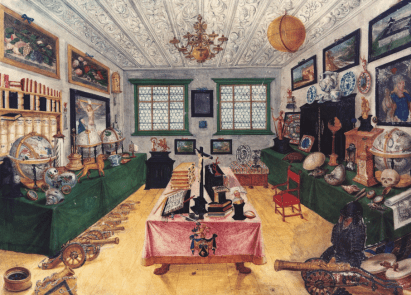
Pre-modern museums or cabinets of curiosities consisted of exotic and expensive objects collected by wealthy aristocrats and displayed within their large stately homes. The public was free to visit, this would usually cause mass unregulated and ill-disciplined working class crowds. The rare objects had no order or themes applied to their placing and were mixed up around the home, causing many items to be damaged or stolen (Mauries, 2011).
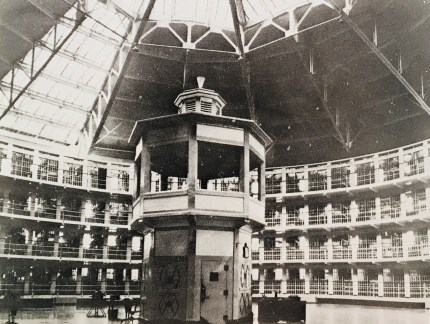
An increase in the population during the late 18th and 19th century caused massive social change in the way governments controlled the population. Foucault’s (1977) panoptic model theory detailed that there was a decline in torture and executions and an increase in modern panoptic prisons. These were designed to, in theory, consistently monitor and control mass amounts of prisoners. The panoptic style of monitoring meant prisoners would eventually self-discipline and follow prison society rules in fear of possible punishment.
This marks the beginning of modern society being encouraged by governments to participate in their own surveillance and control. This theory of mass control was also integrated within other public sectors such as schools, workplaces and museums. The public was encouraged or legally required to attend these institutes in order to learn the socially expected norms and values of that society. In the past museums only attracted the upper classes due to their high cultural capital. Modern museums, in order to shape the masses, have adapted to be more inclusive of all possible visitors to manipulate and train people to engage in regulated social routines/performances (Bennett, 1995).
In order to see if this theory can still be applied within postmodern society, I conducted field research on The Lincoln Collection Museum and Usher Art Gallery. This would give me a better understanding of the panoptic model and if museums actively apply it in order to shape certain socially acceptable visitors.
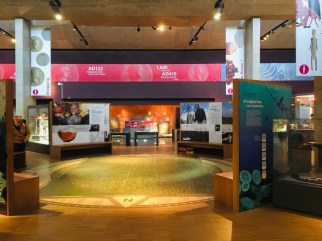
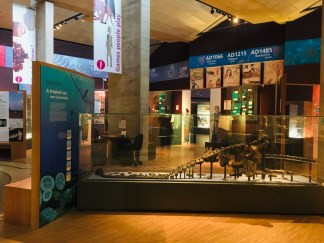
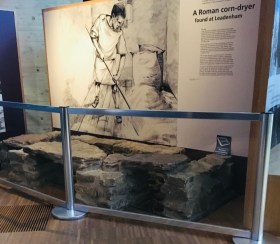
Figures 3 and 4 show the historical exhibition that is open to the public. This offered many elements to attract a variety of visitors. A clear sign posted layout was used so visitors would follow the exhibit in a constructed order. The objects were arranged in a calculated way to encourage the educational and scientific understanding of the exhibit (Bennett, 1995).
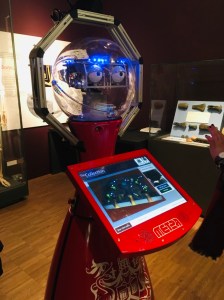

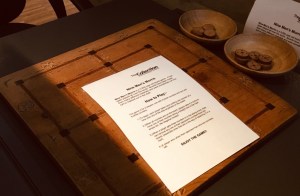
The use of technology and educational games targets young visitors. The museum has prior knowledge that if children are entertained they are more likely to engage with education, thus less likely to deviate and cause issues. The museum is actively encouraging children to visit and interact with the historical artefacts to gain cultural capital, expected in society. Schools encouraging trips to museums supports the theory of mass conformist manipulation as future members of society, the children are taught what is deemed socially acceptable behaviours and interests (Hooper-Greenhill, 1994).
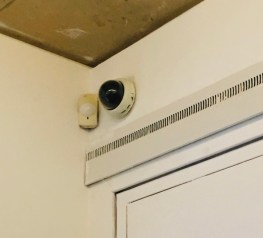
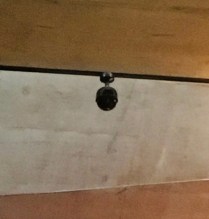
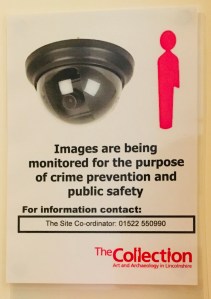
While visiting I noticed both the museum and art gallery relied heavily on security monitoring systems and instructional notices to keep order, similar to Foucault’s panoptic model (1977). These tactics would allow panoptic monitoring and would encourage visitors to subconsciously conform to meet the museum’s social expectations.
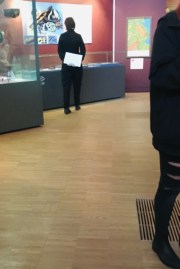

The use of security guards and cameras created a subtle surveillance society within the museum. I found I adopted the acceptable role of the visitor in fear of social judgement or punishment. In order to present my self as an acceptable member of society, I altered my own behaviours to conform to the social rules of the museum (Goffman, 1971).
The private exhibition in the museum had an entry fee and when entering we were told that photography was not allowed in order to protect certain art pieces. This increased the formality of the experience and I increased surveillance on my self and others. I spoked rarely, and at a lower volume than in previous areas of the museum, in fear of being socially judged (Goffman, 1971). This is similar to the experience in the art gallery. The gallery’s layout was less structured, expecting visitors to have prior knowledge and experience with gallery formats.
The museum has adapted in order to attract a larger variety of visitors, that can be moulded into mass conformists. But due to the status surrounding the art pieces on display in the private exhibit and in the gallery, the traditional museum visitors are still targetted. Middle-class visitors with a background of knowledge on art and history will appreciate the exhibit more than someone with little to no prior knowledge. A layman wishing to learn more about the art on display must conform and follow the museums/galleries set rules, moulding to middle-class norms and values.
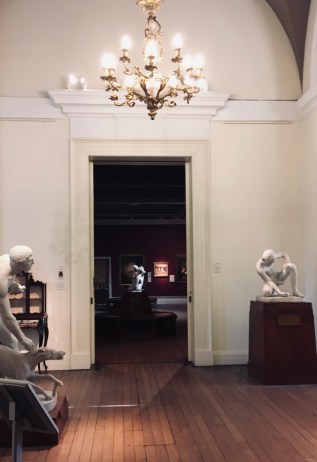
Museums and Art galleries do not simply admit visitors, they actively manipulate visitors through panoptic monitoring and exhibit layouts. Visitors must conform to the standard of visitor that is acceptable within the museum and in wider society.
References:
Bennett, T. (1995). The birth of the museum: History, theory, politics (Culture: policies and politics). London: Routledge.
Foucault, M., & Sheridan, A. (1977). Discipline and Punish: The birth of the prison. Penguin.
Goffman, E. (1971). The presentation of self in everyday life. (A pelican book). Harmondsworth: Penguin.
Hooper-Greenhill, E. (1994). Museums and their visitors (The heritage). London: Routledge. (1994). Retrieved January 9, 2019, from http://web.b.ebscohost.com/ehost/detail/detail?vid=0&sid=109dff6c-dfe7-4b1b-906e-5a8cd581c050%40sessionmgr103&bdata=JnNpdGU9ZWhvc3QtbGl2ZQ%3d%3d#AN=83154&db=nlebk
Mauriès, P. (2011). Cabinets of curiosities. New York: Thames & Hudson.
 SOC221 - Advanced Social Thought Blog
Leave a comment